
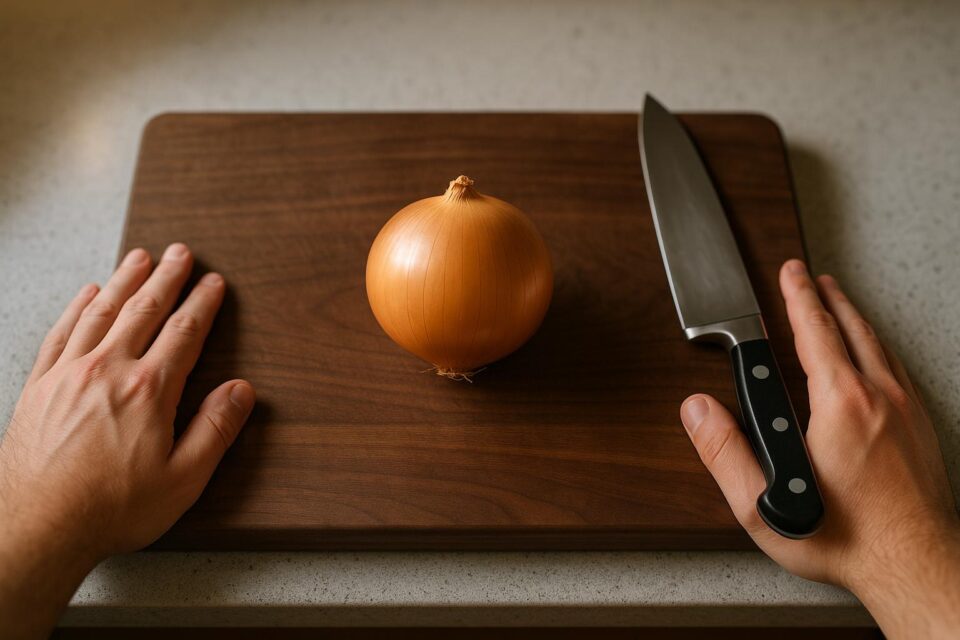
Dicing onions looks like a tiny kitchen task in core cooking techniques, but it quietly controls the quality of entire meals. If onions are uneven, half the pan burns while the other half steams. If cuts are crushed, flavor turns muddy and sharp instead of sweet and balanced. This method gives you a repeatable sequence so your prep becomes reliable under real weeknight pressure, not just in theory.
The goal is not speed first. The goal is clean structure: stable board, safe grip, clear cut order, and consistent spacing. Once structure is solid, speed arrives naturally. Use this guide as your calibration drill: one onion, one knife, one rhythm, and no shortcuts that break control.
What this technique actually does
A proper dice creates pieces that cook at roughly the same rate. That means predictable sweating in aromatics, even browning in skillets, and better texture in soups, braises, and sauces. You also gain better seasoning control because salt, oil, and heat distribute more evenly over similarly sized surfaces.
Keeping the root attached during early cuts acts like a temporary hinge. It prevents layers from sliding apart while you build your grid. When used correctly, the onion stays coherent until the final crosscuts, then releases into clean cubes with minimal tearing.
When to use this cut
- Soup bases where onions should soften uniformly without random burnt bits
- Curry and stew starts where aromatics need synchronized breakdown
- Sautéed vegetable mixes where one oversized onion chunk ruins texture balance
- Stuffing, meatloaf, and fritter mixtures where moisture distribution matters
- Batch cooking sessions where consistency saves time over multiple pans
Tools
- 8-inch chef’s knife, freshly sharpened
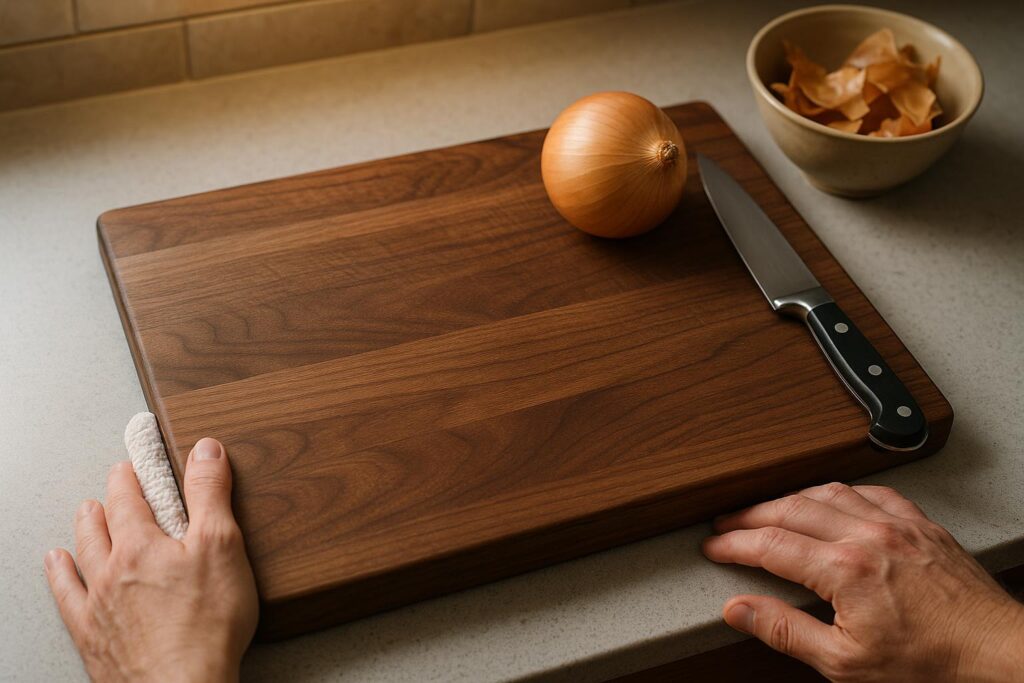
- Large cutting board with damp towel underneath to prevent drift
- Bench scraper for efficient transfer
- One medium yellow onion (or two small onions), selected and handled using safe produce guidance
- Small scrap bowl for peel and root trim
- Clean towel for quick moisture control on board and hands
Prep checklist before first cut
- Confirm board cannot slide in any direction and follow the 4 food safety steps
- Dry your knife handle and fingertips for secure grip
- Place scrap bowl and final container within easy reach
- Pick target dice size before cutting: fine, medium, or large
- Commit to claw grip on guide hand from the start
Step-by-step: how to dice an onion
- Set the station. Lock the board with a damp towel and clear enough space that your knife path stays unobstructed. Stand balanced and keep shoulders relaxed; tension leads to jerky, uneven cuts. Start with claw grip ready so your first movement is safe and deliberate.
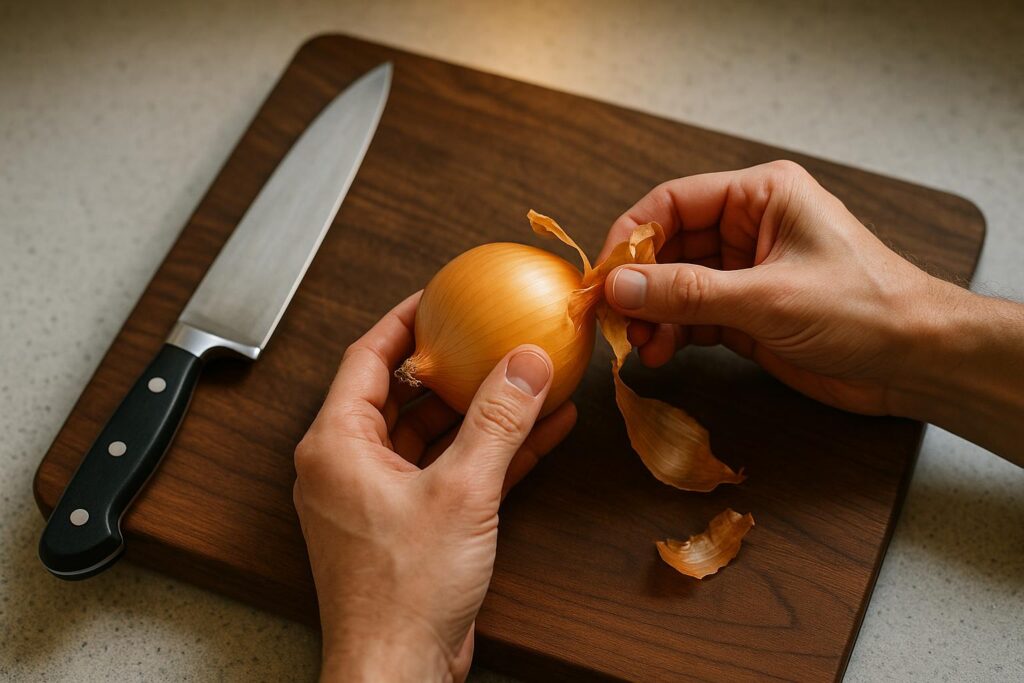
- Trim and peel. Remove the stem end, then peel away papery skin and any tough outer layer. Keep the root intact. If the onion is very dry, a quick rinse and pat dry can reduce loose skin flakes that interfere with control; for longer holding, follow onion receiving and storage guidance.
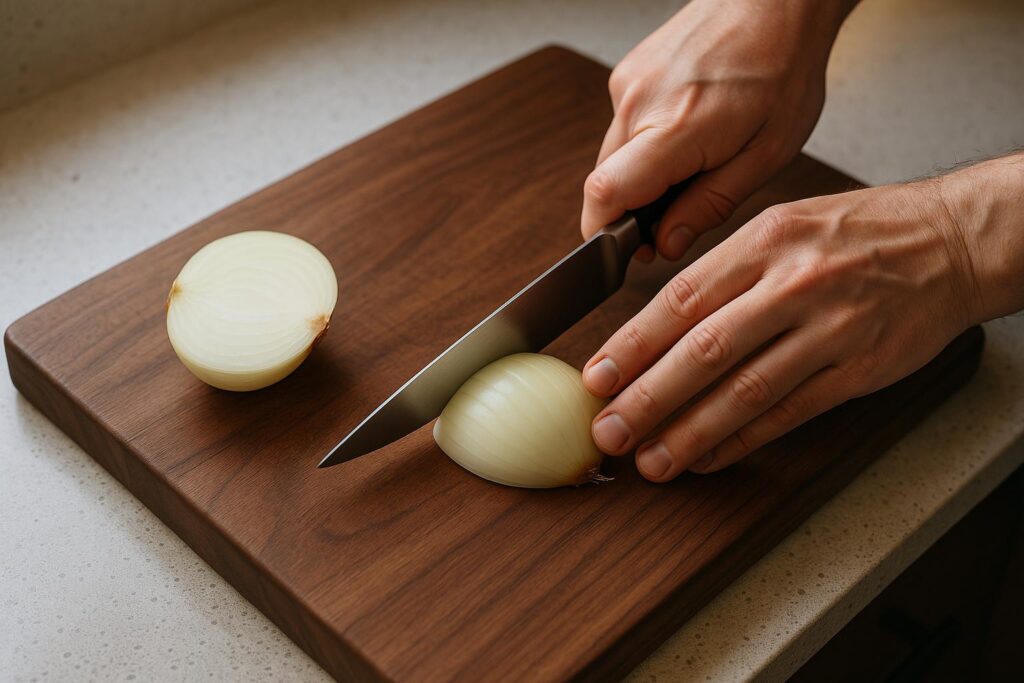
- Halve and make horizontal cuts. Split through the root and place one half flat-side down. Make one to three horizontal passes depending on onion height and desired dice size. Stop short of the root so the half remains connected and stable.
- Vertical cuts then crosscuts. Cut vertical lines from front toward root with even spacing. Then rotate direction and crosscut from stem side toward root. Use smooth forward slicing motion, not heavy chopping. The onion should release in clean cubes.
- Finish the root section. Discard the dense root nub and slice any attached sections to match your target size. Do not overwork this part; one or two controlled passes are enough.
- Quality check the pile. Scan for oversized pieces and crushed fragments. A few irregulars are normal, but large variation means spacing drifted or pressure got too heavy. Correct on the second half.
- Transfer cleanly. Use a bench scraper to move diced onion. Dragging with the knife edge dulls it and can scatter pieces. If storing, seal immediately to preserve aroma and prevent fridge odor transfer.
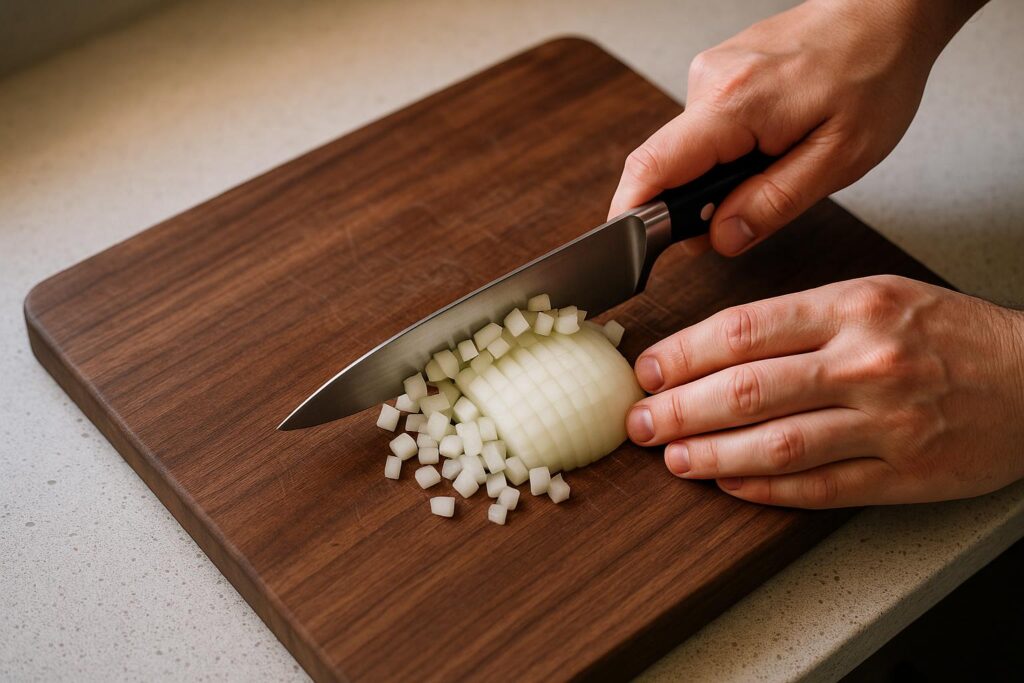
Cues that you are doing it right
- Most pieces look close in size at a quick glance
- Knife enters and exits layers cleanly with little tearing
- Guide hand knuckles stay ahead of fingertips in claw position
- Onion half stays stable until late in the sequence
- Board remains dry, anchored, and uncluttered throughout prep
Mistakes and fixes
- Board slips: stop immediately and reset with a damp towel. Never “push through” instability.
- Ragged pieces: sharpen blade and reduce downward force. Slice forward; do not crush straight down.
- Uneven cube sizes: choose spacing once, then keep vertical lines parallel and rhythm consistent.
- Root detaches too early: leave about 1 cm uncut at the root during horizontal and vertical passes.
- Finger exposure: shorten stroke length, reset claw grip, and slow your pace for two or three cuts.
- Watery onion mush: avoid repeated recutting. Finish in fewer, cleaner passes with sharper edge.
Size variations and how they behave in the pan
- Fine dice (3–4 mm): melts quickly, ideal for sauces and dressings where texture should disappear.
- Medium dice (6–8 mm): best default for soups, sauté bases, and general home cooking.
- Large dice (10–12 mm): keeps structure in braises and sheet-pan roasts.
- Shallot adaptation: fewer horizontal cuts, tighter vertical spacing, lighter pressure.
Practice drill for consistency
Use two onions back-to-back. On onion one, prioritize safety and spacing. On onion two, keep the same precision but reduce total time by about ten percent. Compare both piles: if speed harms uniformity, return to slower pace and lock technique first. This micro-drill builds durable speed better than rushing random prep tasks.
Repeat this drill three times across one week. Most cooks see immediate improvement in pan behavior because onions begin softening and browning at the same pace instead of fragmenting into mixed texture zones.
Troubleshooting in real cooking scenarios
If onions are browning before they soften, your dice is likely too fine for the heat level. Either increase piece size slightly or reduce burner intensity and extend cook time by a minute. If the pan looks crowded and onions steam instead of sauté, cook in batches or use a wider pan so moisture can evaporate. When recipes call for “sweating” onions, keep heat moderate and stir gently so edges do not brown prematurely.
For meal prep, label containers by cut size. Fine dice and medium dice behave differently, and keeping them separate prevents accidental texture mismatch later in the week. If onion aroma feels too aggressive in cold applications, rinse briefly and dry thoroughly before mixing into salads or relishes. Small process controls like these make the same knife cut more versatile across recipes.
Frequently Asked Questions
Do I need horizontal cuts every time?
No. For a rustic medium dice, vertical and crosscuts can be enough if your spacing is consistent.
Why keep the root end attached?
The root acts like a hinge that holds onion layers together while you build your cut grid.
What dice size should beginners practice first?
Start with a medium dice around 6 to 8 mm. It is forgiving but still shows spacing errors.
How can I reduce eye irritation while cutting onions?
Use a sharp knife, work quickly, and avoid crushing pressure that releases more onion juice.
Can I prep diced onion ahead of time?
Yes. Store it in a sealed container in the fridge and use within one to two days for best flavor.
Why does my onion turn mushy in the pan?
Your pieces are likely too small or uneven. Improve size consistency and keep pan heat controlled.
