
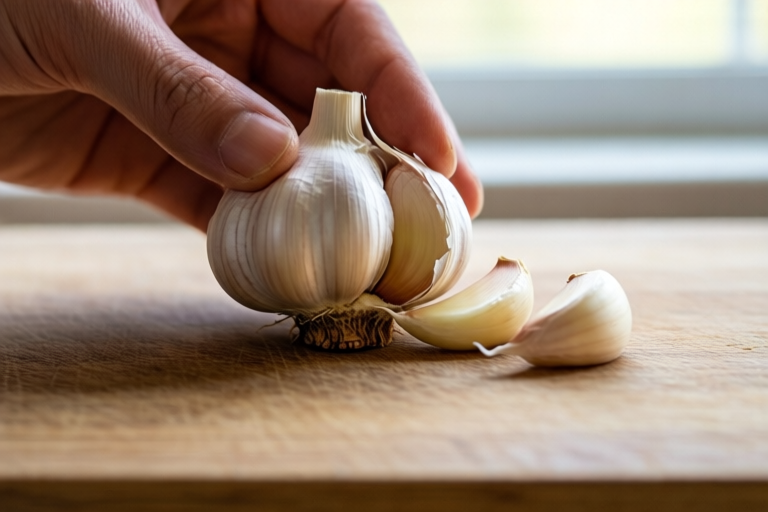
Dicing onions teaches control, but slicing garlic teaches restraint. Garlic is small, sticky, and easy to crush. If the slices are too thick, they stay sharp and raw in quick dishes. If they are too thin or uneven, the smallest pieces brown too fast and turn bitter before the rest of the pan is ready.
The goal is not paper-thin restaurant speed. The goal is clean, even slices that cook predictably. A sharp knife, a stable board, and light pressure matter more than force. Use this as a focused knife-skills drill: one clove, one flat side, one steady rhythm, and no smashing unless the recipe actually asks for crushed garlic.
What this technique actually does
Thin garlic slices give you more surface area than a rough chop, but less exposed juice than minced garlic. That makes them useful when you want garlic flavor to bloom into oil without turning harsh. The slices can soften, lightly toast, or perfume a sauce while still being visible enough to control.
Even thickness is the key. A mixed pile of thick coins and tiny shards is hard to cook well because the tiny pieces burn first. Clean slices let you choose the result: pale and sweet for gentle sauces, lightly golden for oil-based pasta, or crisp for toppings.
When to use this cut
- Pasta sauces where garlic should flavor oil before liquid is added
- Stir-fries where garlic needs to cook quickly but stay recognizable
- Soups and broths where sliced garlic can soften without disappearing
- Toasted garlic toppings where even browning matters
- Vegetable saut?s where minced garlic would burn too quickly
Tools
- Small sharp chef knife, petty knife, or paring knife
- Stable cutting board with a damp towel underneath
- Fresh garlic cloves with tight skins and no green sprout if possible
- Small scrap bowl for skins and trimmed ends
- Clean towel for drying fingertips and board
- Bench scraper or knife spine for moving slices, never the cutting edge
Prep checklist before first cut
- Lock the board so it cannot slide
- Peel only the cloves you plan to use right away
- Trim the dry root end from each clove
- Dry sticky fingertips before slicing
- Decide whether you want thin slices or slightly thicker coins
- Keep your guide hand in a relaxed claw shape
Step-by-step: how to slice garlic thinly
Step 1: Separate and loosen the clove
Pull one clove from the bulb and trim the dry root end. If the skin is tight, press gently with the flat side of the knife just enough to loosen the peel. Do not crush the clove flat unless the recipe calls for crushed garlic.
Step 2: Peel and inspect
Remove the papery skin and check for a green sprout running through the center. A small sprout is not dangerous, but it can taste sharp or bitter in delicate dishes. For gentle sauces, split the clove lengthwise and lift the sprout out with the knife tip.
Step 3: Create a stable side
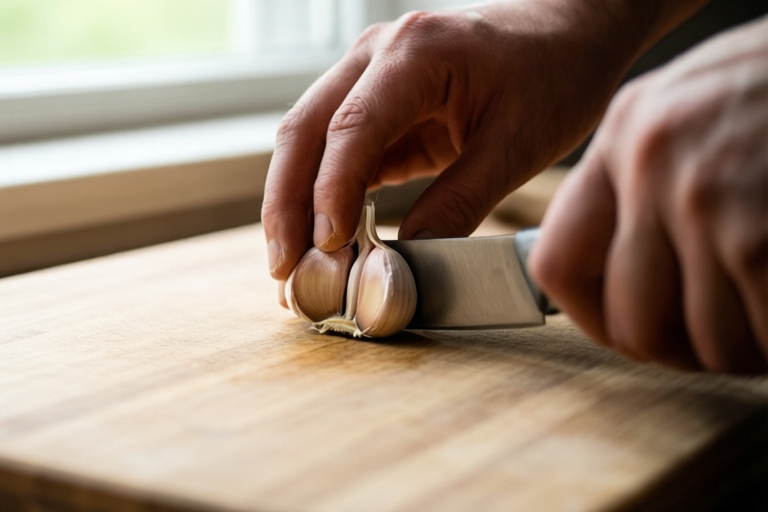
Place the clove on its flattest natural side. If it rolls, cut a very thin slice from one side to make a stable base. Stability matters because garlic is small and slippery compared with larger vegetables.
Step 4: Set your guide hand
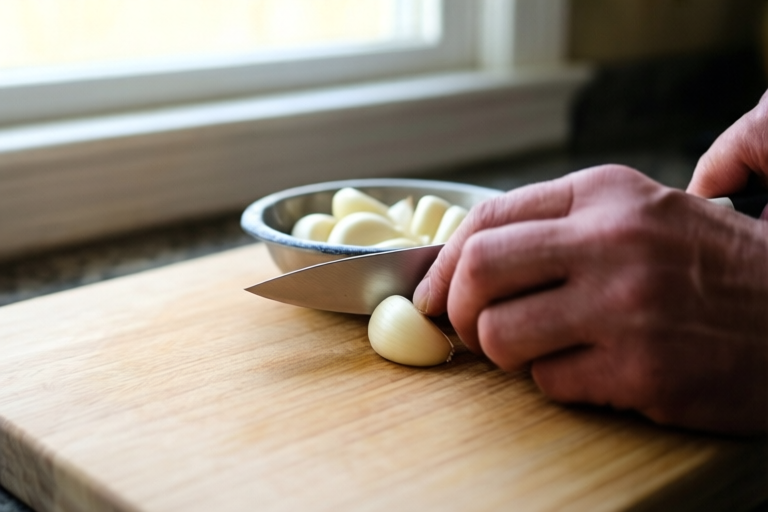
Curl fingertips back and let your knuckles guide the blade. Keep the clove close to the board and use short strokes. Your knife should move forward and down smoothly, not chop straight into the clove with force.
Step 5: Slice with even spacing
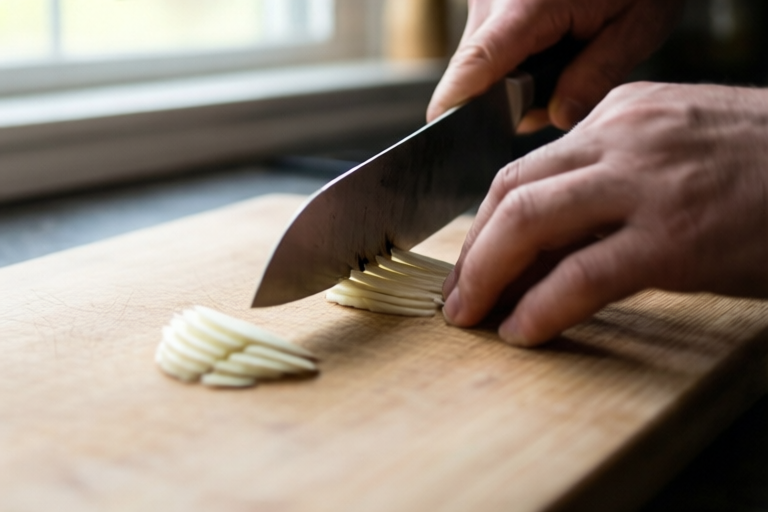
Start at one end and cut thin, even pieces. For most cooking, aim for slices about 1 to 2 mm thick. Keep the spacing consistent instead of chasing maximum thinness. A slightly thicker even slice cooks better than a pile of broken flakes.
Step 6: Slow down near the end
The final section of the clove is the least stable. Pause, reset your grip, and finish with one or two careful cuts. If the last piece is too small to hold safely, lay it flat and slice it once, or save it for mincing later.
Step 7: Transfer cleanly
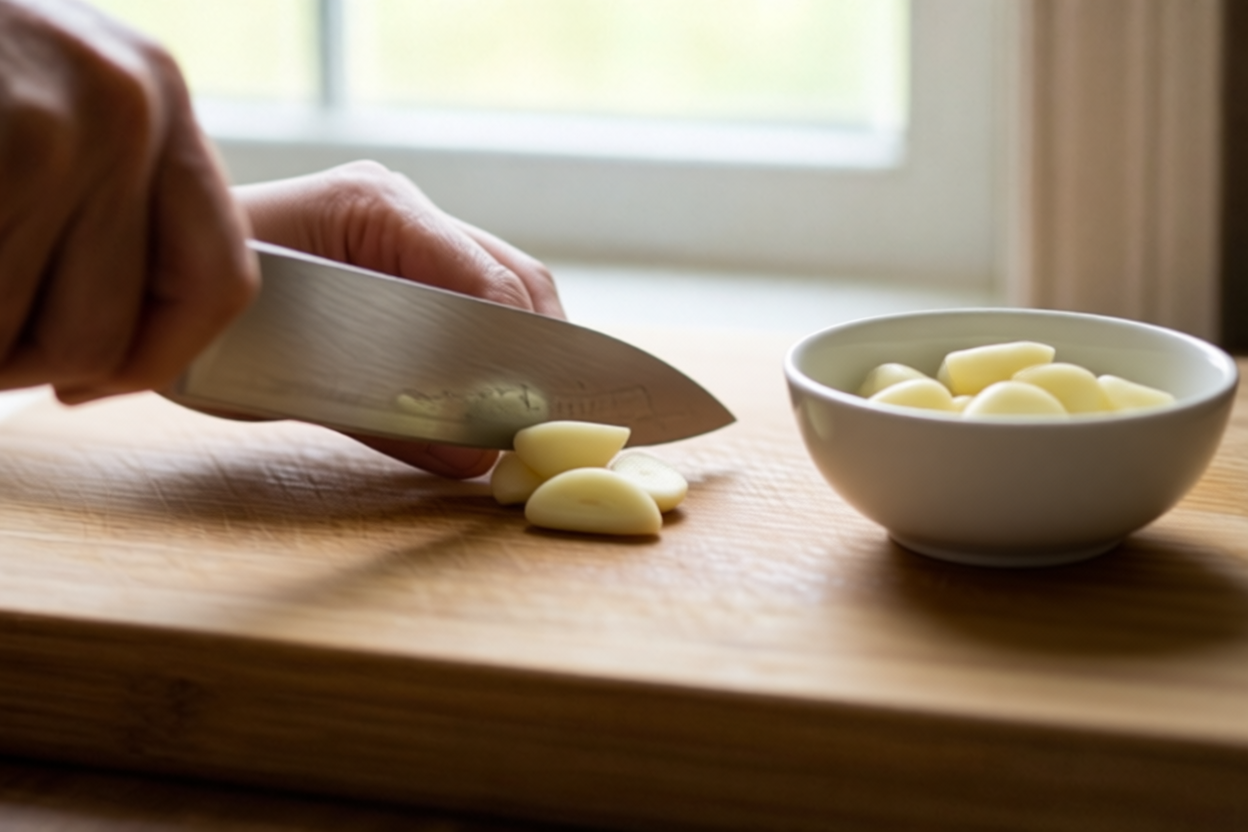
Move the slices with a bench scraper or the back of the knife. Do not scrape with the sharp edge. Garlic is sticky, so wipe the blade if slices cling and start bending under the knife.
Cues that you are doing it right
- Most slices are close in thickness at a quick glance
- The garlic looks cut, not smashed or wet
- The clove stays stable against the board
- Your fingertips stay tucked behind the knuckles
- The slices cook at the same pace in warm oil
Mistakes and fixes
- Garlic burns quickly: lower the heat before adding garlic, or add it later in the recipe.
- Slices are ragged: sharpen the knife and use a smoother forward slicing motion.
- Clove keeps rolling: create a small flat base before slicing.
- Pieces stick to the blade: wipe the blade and reduce downward pressure.
- Slices are uneven: slow the rhythm and choose a visible spacing before each cut.
- Flavor tastes bitter: avoid browning tiny fragments and remove green sprouts for delicate dishes.
Size variations and how they behave in the pan
- Very thin slices: brown fast and work well for crisp garlic toppings.
- Medium slices: best default for pasta sauces, saut?s, and brothy dishes.
- Thick coins: soften more slowly and suit braises, roasts, and gentle simmering.
- Lengthwise slices: look elegant and stay easier to track in oil.
Practice drill for consistency
Use three cloves. On the first clove, focus only on safe hand position. On the second, focus on even thickness. On the third, keep the same thickness while reducing hesitation between cuts. Compare the piles before cooking them.
Then warm a small amount of oil over medium-low heat and cook each pile separately. Watch which slices turn golden first. If small fragments brown much faster than the rest, your pressure is too heavy or your spacing is drifting. The pan will show you what the cutting board hides.
Troubleshooting in real cooking scenarios
If garlic turns brown before the onions soften, the garlic was added too early or sliced too thin for the heat level. Start onions first, then add garlic once the onions have softened and released moisture. In oil-based pasta, keep the heat gentle and remove the pan from the burner for a moment if the garlic starts coloring too fast.
If the garlic flavor disappears, the slices may be too thick or added too late. Give medium slices enough time to perfume the oil before adding watery ingredients. If the dish tastes harsh, the garlic may be undercooked, crushed too aggressively, or scorched at the edges.
Frequently Asked Questions
Should I smash garlic before slicing it?
Only press lightly to loosen the skin. Heavy smashing makes the clove wet and uneven, which works against clean slices.
How thin should garlic slices be?
For most home cooking, 1 to 2 mm is a good target. Evenness matters more than extreme thinness.
Should I remove the green sprout?
For delicate dishes, yes. It can taste sharper than the rest of the clove. For hearty stews, it matters less.
Why does sliced garlic burn so easily?
Thin slices have a lot of exposed surface area. Use moderate or low heat and watch the color closely.
Can I slice garlic ahead of time?
It is better fresh. Sliced garlic gets stronger and stickier as it sits. If needed, refrigerate it briefly in a sealed container.
Is sliced garlic stronger than minced garlic?
Usually it tastes gentler because fewer cells are crushed. Minced garlic releases more juice and becomes sharper faster.
For more practical kitchen technique guides, visit Knife Kettle. For knife prep and food safety, review USDA cutting board guidance.
