
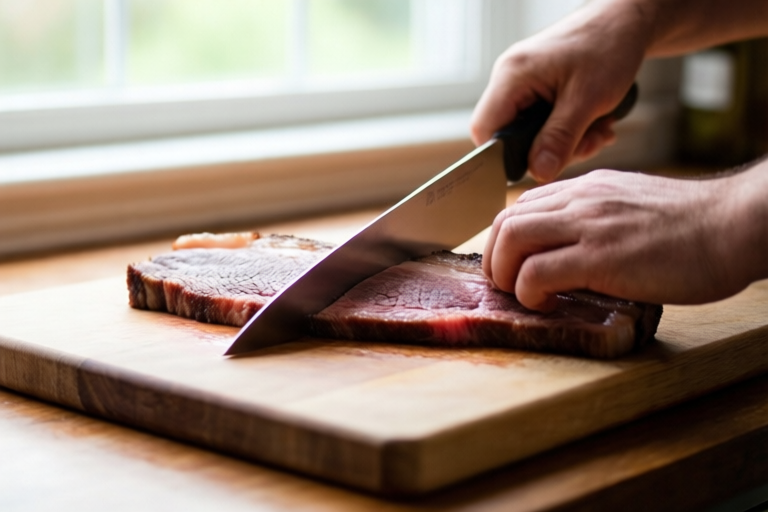
Focus keyword: best knife for cutting brisket
This guide is for BBQ lovers, brisket smokers, home cooks, and knife buyers. Its purpose is to Help readers understand what kind of knife works best for slicing brisket cleanly, what features matter, and when to choose a slicing knife versus a chef knife.
Overview
This article covers 6 practical step(s) you can follow from start to finish.
Step 1: Why Brisket Needs the Right Knife
Understanding the importance of proper knife selection for brisket preparation
Brisket is a tough cut of meat with dense muscle fibers that require precise slicing technique. Using the wrong knife can result in shredding the meat instead of achieving clean slices. A proper brisket knife should have the right blade length, flexibility, and edge retention to slice against the grain effectively. The difference between a good slice and shredded meat often comes down to having the right tool for the job.
Step 2: Slicing Knife vs Chef Knife
Comparing the advantages of each knife type for brisket preparation
While a chef knife is versatile for many kitchen tasks, it's not ideal for slicing brisket. Slicing knives are specifically designed for long, smooth cuts through large pieces of meat. They typically have longer blades (8-12 inches) and are thinner than chef knives, allowing for the gentle sawing motion needed for brisket. Chef knives are thicker and more robust, making them better for chopping vegetables and general prep work, but they can compress and shred brisket fibers.
Step 3: Blade Length and Flexibility
Choosing the optimal blade characteristics for clean brisket slices
The ideal brisket knife should have a blade length of 8-10 inches to accommodate the width of a typical brisket slice. Longer blades allow for continuous slicing motions without lifting the knife. Flexibility is crucial – the blade should have slight flex to follow the contours of the meat without applying excessive pressure that could tear the fibers. Stiffer blades are better for carving, while flexible blades excel at slicing.
Step 4: Granton Edge / Hollow Edge Discussion
Exploring specialized blade features for improved slicing performance
Granton edges (also called hollow-ground edges) feature small divots along the blade that create air pockets between the blade and food. While these are excellent for preventing sticking with foods like roasts and deli meats, they're not essential for brisket. The primary concern with brisket is clean slicing rather than preventing sticking. However, some cooks prefer granton-edge slicing knives for their slightly reduced friction during long slicing strokes.
Step 5: Handle Comfort and Safety
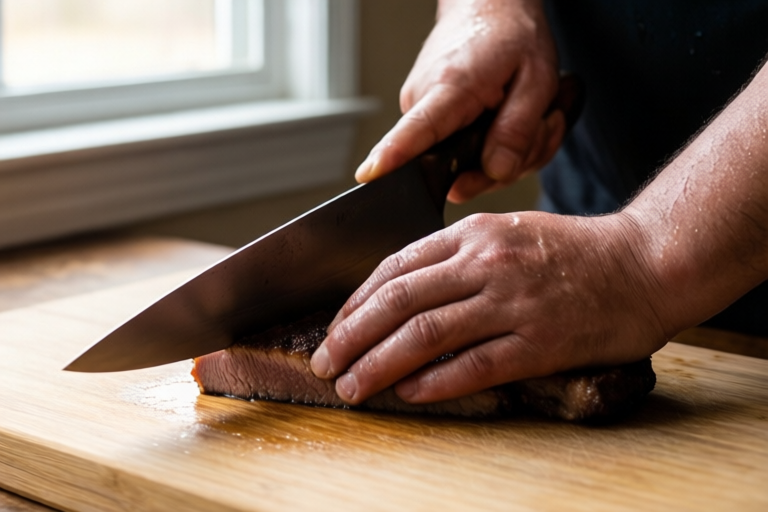
Ensuring proper grip and control during the slicing process
A comfortable, secure handle is crucial when working with large, sharp knives. The handle should provide a good grip even when hands are wet or oily from the cooking process. Full tang construction (where the blade extends through the entire handle) provides better balance and durability. Look for handles made from materials that won't become slippery when wet, such as textured synthetic materials or properly sealed wood.
Step 6: Maintenance Tips
Keeping your brisket knife in optimal condition
Regular honing with a steel rod maintains the edge alignment between sharpenings. Brisket knives should be sharpened professionally or with appropriate whetstones every few months depending on usage. Always hand wash and dry immediately after use to prevent corrosion. Store in a knife block or sheath to protect the edge. Avoid cutting on hard surfaces like glass or stone that can dull the blade quickly.
Conclusion
You now have a complete draft for "Best Knife for Cutting Brisket: What to Look For Before You Buy" that can be refined further before publishing to WordPress.
Frequently Asked Questions
What kind of knife works best for slicing brisket?
A long, sharp slicing knife with enough length to make smooth strokes is usually best. A chef knife can work, but it often needs more pressure and shorter passes.
Why does brisket shred instead of slicing cleanly?
Brisket can shred when the knife is dull, the blade is too short, the meat is too hot, or the cut goes with the grain instead of across it.
Is a granton edge useful for brisket?
A granton edge can reduce sticking, but sharpness, blade length, and a smooth slicing motion matter more than the edge style alone.
How long should a brisket slicing knife be?
Many cooks prefer a blade around 10 to 12 inches because it can cross a wide cut of meat with fewer strokes.
What should I check before buying?
Check sharpness, blade length, handle comfort, flexibility, and whether the knife feels controlled during a long slicing motion.
For more practical kitchen technique guides, visit Knife Kettle. For food-safety basics, review USDA cutting board guidance.
