
Learning how to mince garlic is mostly about control. Garlic is small, sticky, and easy to overwork. If you press too hard or keep chopping after the pieces are already small, the garlic turns wet and pasty. That paste can taste harsh in raw sauces and burn fast in hot oil.
A good mince keeps the garlic in tiny pieces without crushing all of its juices onto the board. The pieces should look fine and even, but still separate enough to pick up with the side of a knife. This guide shows the calm, repeatable way to get there.
What minced garlic should look like
Minced garlic is smaller than chopped garlic and less smooth than garlic paste. The pieces should be tiny, irregular little bits about 1 to 2 mm across. They should look moist, because garlic is naturally juicy, but they should not smear into a shiny puddle.
That texture matters in cooking. Minced garlic releases flavor quickly, which is useful for sauces, dressings, stir-fries, soups, and marinades. But the smaller the pieces get, the faster they brown. A clean mince gives you flavor without making the garlic scorch before the rest of the recipe catches up.
When to mince garlic instead of slicing or crushing
Mince garlic when you want the flavor to spread through the whole dish. It works well in vinaigrettes, compound butter, meatballs, quick pan sauces, marinades, and saut?s where the garlic should disappear into the background.
Slice garlic when you want visible pieces and a gentler flavor. Crush garlic when you want a stronger punch and do not mind a softer texture. Make a paste only when the recipe needs it, such as aioli, toum, some dressings, or a marinade where the garlic must dissolve into the mixture.
Tools
- A sharp chef knife or santoku
- A stable cutting board
- A damp towel or non-slip mat under the board
- A small scrap bowl for skins and root ends
- A clean towel for sticky fingers or blade residue
Avoid using a dull knife. A dull edge forces you to press harder, and that pressure is one of the main reasons garlic becomes paste before it becomes mince.
Prep checklist before first cut
- Stabilize the cutting board so it cannot slide
- Separate only the cloves you need
- Trim the dry root end from each clove
- Peel away all papery skin
- Dry the clove if it feels wet or slippery
- Decide whether you want a fine mince or a medium mince
Garlic sticks to everything once it is cut, so a tidy station helps. Keep skins away from the active cutting area and wipe the blade if garlic starts collecting on the side.
Step-by-step: how to mince garlic without turning it into paste
Step 1: Loosen and peel the clove
Place one garlic clove on the board. Trim the dry root end, then press the clove gently with the flat side of the knife just enough to loosen the skin. Do not smash it flat. A hard smash ruptures the clove and pushes juice onto the board before you even start cutting.
Peel off the skin and check that no papery pieces are stuck to the garlic. Small skin fragments are annoying later because they blend into the mince and feel tough in the finished food.
Step 2: Slice the clove lengthwise
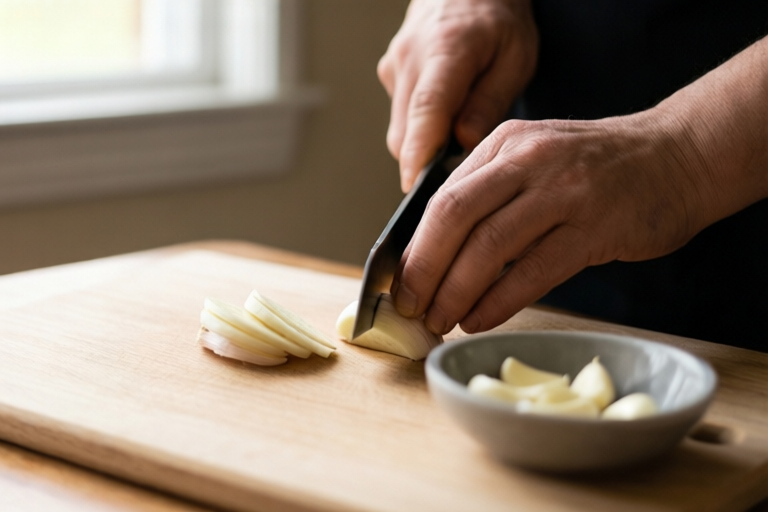
Set the peeled clove on its flattest side. If it rolls, shave off a very thin piece to create a stable base. Slice the clove lengthwise into thin planks. The thinner and more even these planks are, the easier it is to mince without over-chopping.
Keep your guide hand curled and move slowly. Garlic is too small for big knife motions. Short, controlled strokes are safer and cleaner.
Step 3: Cut the planks into strips
Gather the planks into a neat stack if they are stable enough. Turn them and cut across into narrow strips. If stacking feels slippery, skip the stack and cut one or two planks at a time.
This stage is where the mince starts to become easy. You are building small pieces with organized cuts instead of relying on random chopping at the end.
Step 4: Chop across the strips
Now cut across the strips to make small pieces. Use the front half of the knife and keep the tip close to the board. Work through the garlic once, then pause and look at the size.
If the pieces are already small enough, stop. The biggest mistake is continuing because mincing feels unfinished. Garlic goes from minced to mashed quickly.
Step 5: Gather and finish lightly
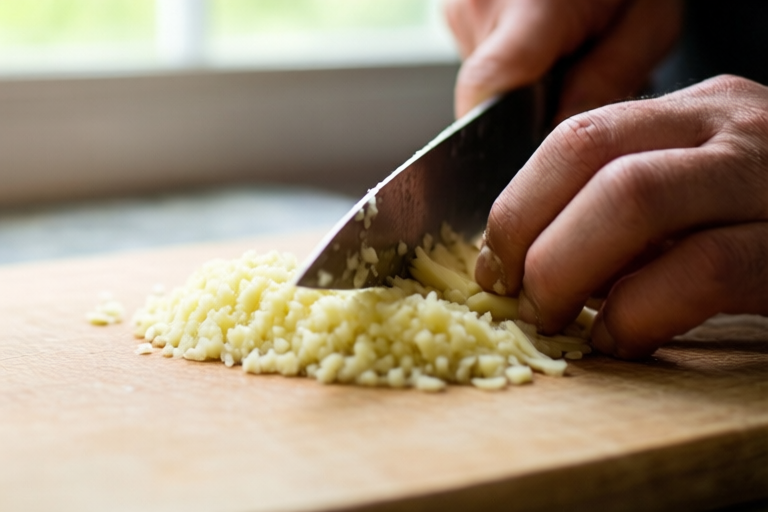
Use the side of the knife to gather the garlic into a small pile. Rock the knife through the pile a few times only where larger pieces remain. Keep the pressure light. The goal is to cut missed pieces, not crush the whole pile.
Do not sprinkle salt over the garlic unless you intentionally want paste. Salt acts like an abrasive and pulls moisture out, which is helpful for paste but not for a dry, clean mince.
Step 6: Transfer without scraping the sharp edge
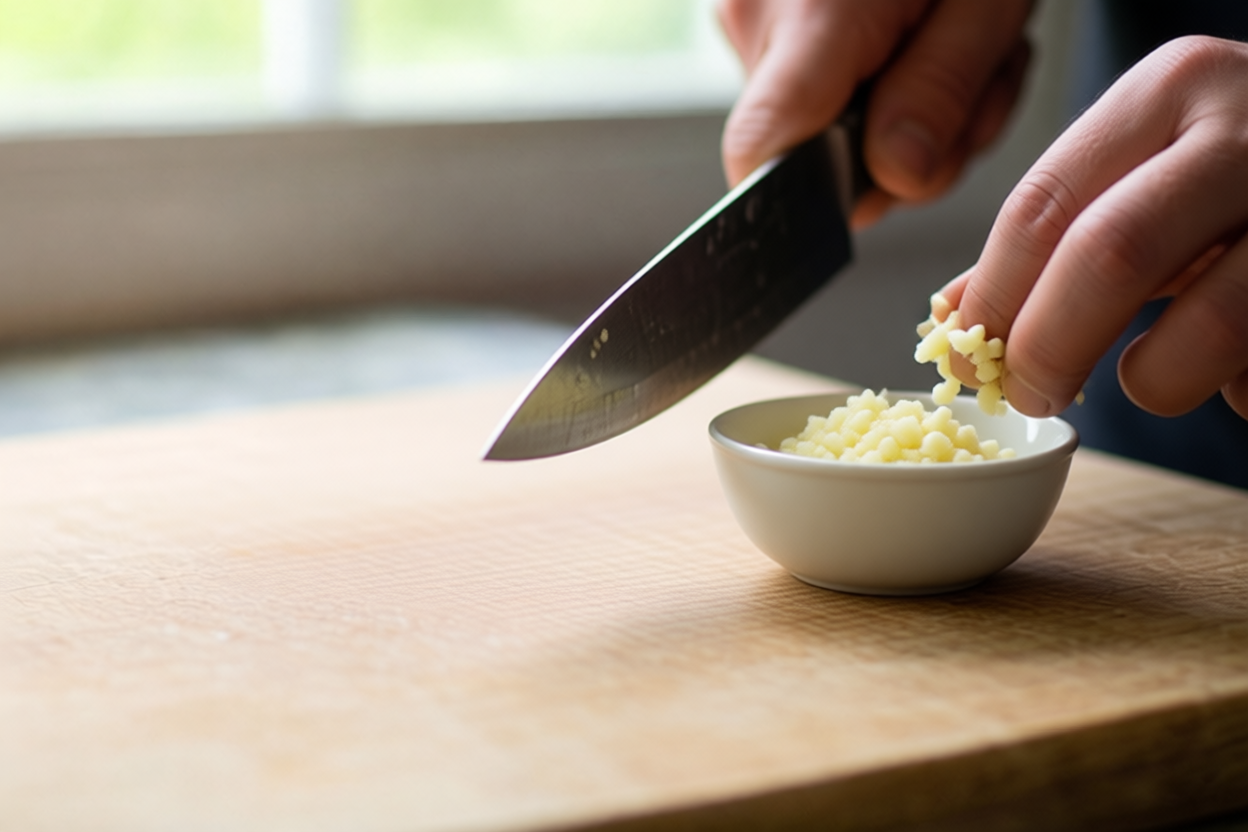
Move the minced garlic with a bench scraper or the back of the knife. Do not drag the sharp edge across the board. That dulls the knife and smears garlic into the wood grain.
If garlic clings to the blade, wipe it off with a clean finger placed safely away from the edge, or use a small spatula. Sticky garlic is normal; mashed garlic is the problem.
Cues that you are doing it right
- The pieces are small but still visibly separate
- The garlic smells fresh and sharp, not bruised and harsh
- There is no wet smear spreading across the board
- The knife moves through the garlic instead of crushing it
- The mince cooks evenly without tiny burnt flecks appearing right away
Mistakes and fixes
- Garlic turns into paste: stop chopping sooner and use lighter pressure next time.
- Pieces are too large: make thinner lengthwise slices before chopping across.
- Garlic sticks to the knife: wipe the blade and gather with the back of the knife.
- Flavor tastes bitter: lower the pan heat and add garlic later in the recipe.
- The clove keeps rolling: shave one thin flat side before slicing.
- Mincing feels unsafe: use fewer cloves at a time and slow the motion down.
Fine mince, medium mince, and garlic paste
A fine mince is best when garlic needs to spread quickly, such as in dressings or quick sauces. It gives strong flavor but needs gentle heat.
A medium mince is the safest default for everyday cooking. It has enough surface area to flavor oil or sauce, but it is less likely to burn instantly.
Garlic paste is different. Paste is crushed until the garlic becomes smooth and wet. Use paste when a recipe specifically needs full garlic intensity and no visible pieces. If the recipe says minced garlic, stop before paste.
How to cook minced garlic without burning it
Minced garlic burns faster than sliced garlic because it has more exposed surface area. Warm the oil over medium-low or medium heat, then add the garlic and stir. In many recipes, garlic only needs 20 to 45 seconds before it smells fragrant.
If you are cooking onions, carrots, celery, peppers, or other vegetables, start those first. Add minced garlic after the vegetables have softened a little and released moisture. That moisture gives the garlic a buffer and reduces scorching.
For tomato sauces, soups, and braises, let the garlic bloom briefly in oil, then add liquid before it browns too much. For stir-fries, keep everything ready before the garlic hits the pan because there is no time to search for ingredients once it starts cooking.
Practice drill for cleaner mincing
Use three peeled cloves. On the first clove, make lengthwise planks and stop. Look at whether the slices are even. On the second clove, cut planks into strips and stop. On the third clove, complete the mince using only a few finishing chops.
Compare the piles. The best pile is not the smallest one. It is the pile that looks even, clean, and not wet. That is the texture you want in most cooking.
Frequently Asked Questions
Should I smash garlic before mincing it?
A gentle press is fine for loosening the skin, but a hard smash makes the garlic wetter and stronger. If you want a clean mince, peel first and cut with control instead of crushing.
Why does my minced garlic taste bitter?
It is usually overworked, burned, or both. Use lighter knife pressure, stop before the garlic turns pasty, and cook it over gentler heat.
Can I mince garlic ahead of time?
You can, but fresh minced garlic tastes better. If you need to prep ahead, store it in a sealed container in the refrigerator and use it soon. The flavor gets sharper as it sits.
Is a garlic press the same as mincing?
No. A press crushes garlic and releases more juice, so the result behaves more like a rough paste. That can be useful, but it is stronger and wetter than a knife mince.
Should I add salt while mincing garlic?
Only if you want paste. Salt helps break garlic down and draws out moisture. For a clean mince, leave salt out until the garlic goes into the recipe.
For more practical kitchen technique guides, visit Knife Kettle. For knife prep and food safety, review USDA cutting board guidance.
