
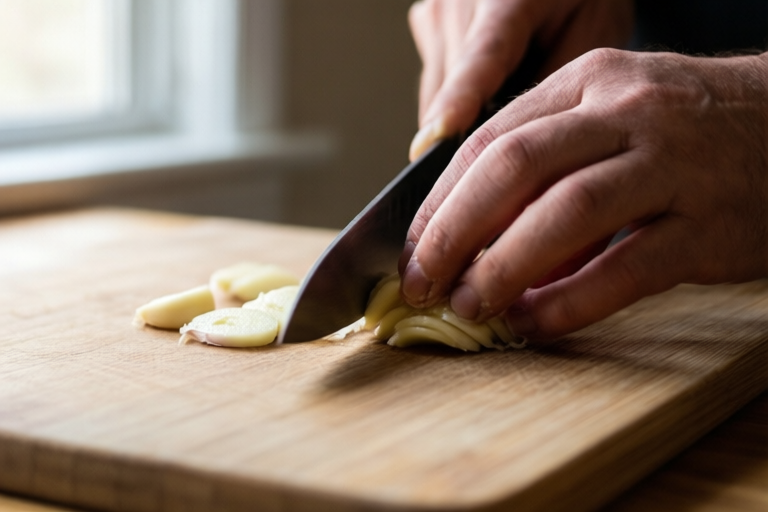
How to Slice Garlic for Pasta Without Burning It looks like a small kitchen task, but it changes how the final food tastes, cooks, and feels. When the pieces, heat, timing, or setup are inconsistent, the recipe becomes harder to control. This guide turns slice garlic into a repeatable cooking technique instead of a guess. For a related technique, see How to Dice an Onion: Clean Cuts, Safe Grip, Consistent Size.
The goal is not speed first. The goal is clean control: stable setup, correct tool choice, clear sequence, and a result you can recognize before the food is ruined. Once the structure is reliable, speed comes naturally. The FDA's food safety in your kitchen resource reinforces the basic clean-workflow habits behind safe prep.
What this technique actually does
Slice Garlic for Pasta Without Burning It helps the ingredient behave predictably. Even pieces cook at a similar pace, measured heat gives flavor time to develop, and a clean workflow prevents the small mistakes that create pasta without burning it. For a related technique, see Knife Skills & Prep.
For home cooks, the practical win is consistency. You can repeat the same action on a busy weeknight and trust the result because the board, tool, ingredient, and timing are under control. USDA's guidance on cutting boards is a useful outside reference for keeping boards clean and avoiding cross-contamination.
When to use this technique
- Weeknight cooking where timing and texture matter
- Sauces, sautés, soups, or pan meals that punish rushed heat
- Meal prep where repeatable texture is more useful than speed
- Recipes where small timing errors create bitterness or dryness
- Practice sessions for better pan control
Tools
- Pan
- Utensil
- Towel
- And prepared ingredients
- Small bowl or container for finished prep
- Clear counter space with no unrelated clutter
Prep checklist before first step
- Read the full method once before starting
- Clear the work area so the main action is not crowded
- Dry your hands, tools, and work surface where needed
- Decide the target result before moving quickly
- Keep scraps, finished food, and active work in separate places
Step-by-step: how to Slice Garlic for Pasta Without Burning It
Step 1: Separate and peel the garlic cloves
Break off the cloves you need and remove the papery skins. Choose firm cloves so the slices hold their shape. For a related technique, see Cooking Techniques.
Step 2: Trim the dry root ends
Cut away only the small dry root end. Leave the rest of each clove intact so it is easier to slice evenly.
Step 3: Place one clove flat on the board
Set one peeled clove on its flattest side. A stable clove lets the knife make thin slices without rolling.
Step 4: Slice with light even strokes
Use short smooth strokes to cut the clove into thin slices. Let the knife edge do the work instead of pressing hard.
Step 5: Separate any stuck slices
Loosen the slices gently with your fingertips or the flat side of the knife. Keep the slices intact rather than crushing them.
Step 6: Move the slices before cooking
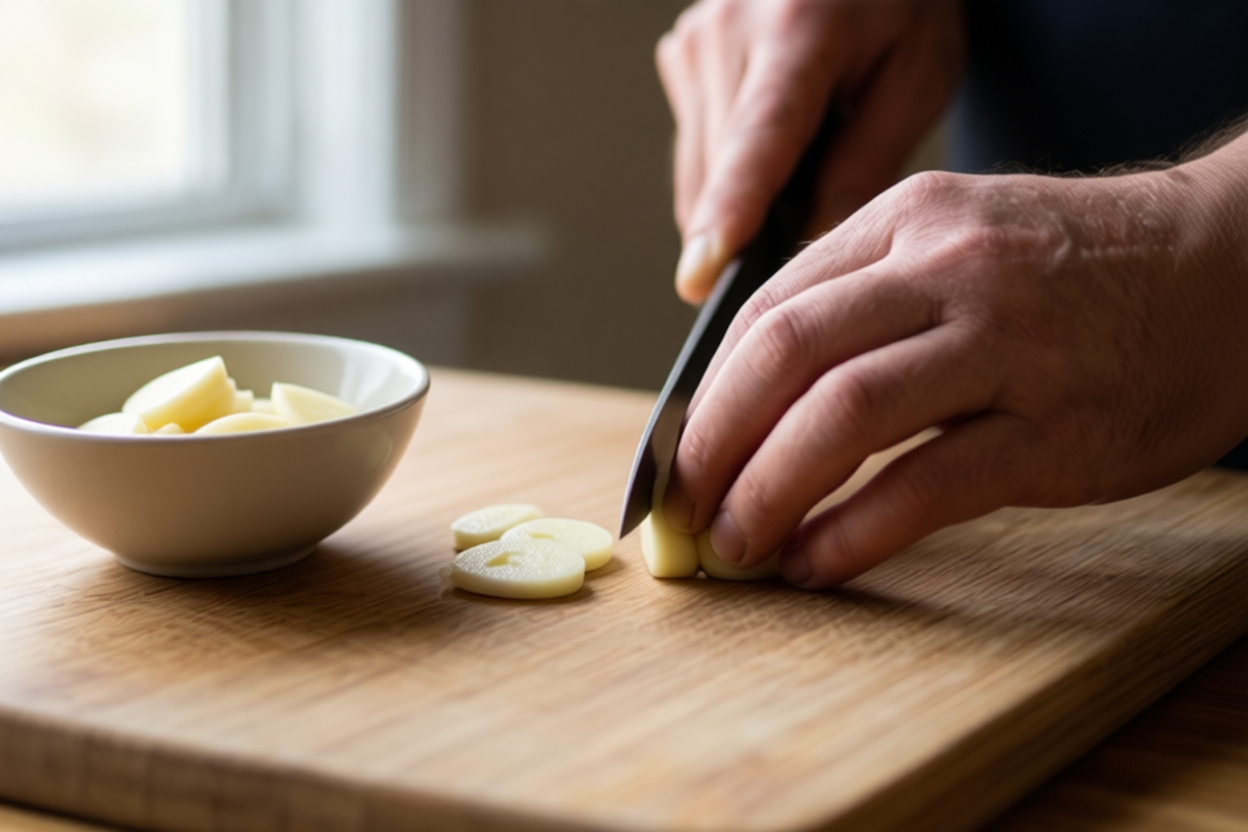
Slide the slices to a small bowl or directly to the pan. Thin garlic slices burn quickly, so keep them ready before heat is high.
Cues that you are doing it right
- The result looks consistent at a quick glance
- The tool feels controlled instead of forced
- The ingredient keeps its intended texture
- There is no harsh, burnt, watery, or muddy smell
- Cleanup and transfer feel simple because the station stayed organized
Mistakes and fixes
- Rushing the setup: pause and rebuild the station before continuing.
- Using too much force: lighten pressure and let the tool do the work.
- Uneven results: slow down and choose one spacing, heat level, or timing target.
- Cluttered surface: remove scraps and extra tools before the next pass.
- Losing texture: stop earlier and avoid repeated handling after the target is reached.
- Harsh flavor: lower the heat, shorten contact time, or use a cleaner cut.
Variations and how they behave
- Fine result: cooks or extracts quickly, but gives you less margin for error.
- Medium result: best default for most home cooking because it is forgiving.
- Larger result: keeps more structure and works better for longer cooking.
- Gentler handling: protects delicate texture and reduces harsh flavor.
Practice drill for consistency
Repeat the same task three times in a row. On the first pass, focus only on safety and setup. On the second, focus on evenness. On the third, keep the same quality while reducing hesitation. Compare the results before cooking, brewing, or serving.
The point of the drill is not perfection. It is calibration. Once you can see the difference between uneven and controlled work, the next recipe becomes easier.
Troubleshooting in real cooking scenarios
If the result tastes harsh, burns quickly, turns watery, or feels inconsistent, the problem usually started before the final step. Check the size, heat, moisture, timing, and tool pressure. Fix one variable at a time instead of changing everything at once.
If the process feels stressful, simplify the station. Use fewer props, work with a smaller amount, and slow the highest-risk motion. A controlled small batch teaches more than a rushed large batch.
How to use the result in real recipes
The finished garlic should match the way the recipe cooks. Small, even pieces are best when the ingredient needs to soften quickly or blend into the background. Larger pieces are better when the ingredient should keep more structure, show up clearly on the plate, or survive longer heat.
Before adding the food to a pan, pot, tray, cup, or bowl, look at the whole batch together. One oversized piece can stay firm while the rest is done. One pile of tiny scraps can burn, turn bitter, or disappear into the dish. Sorting the result for a few seconds is faster than trying to fix uneven cooking later.
For weeknight cooking, use the middle size as your default. It gives you enough surface area for flavor without making the ingredient fragile. When a recipe gives a size range, choose the smaller end for quick cooking and the larger end for roasting, simmering, or longer contact with heat.
Storage, timing, and cleanup notes
Fresh prep usually has the best aroma and texture, but you can still make the workflow easier by preparing the station ahead of time. Set out the board, towel, knife, bowl, and waste container before you handle the ingredient. That way the actual cutting, cooking, or brewing step stays focused.
If you prep ahead, keep the finished ingredient in a sealed container and avoid mixing very different sizes together. Moist ingredients should be patted dry before storage when practical. Delicate herbs and cut vegetables can lose texture if they are packed tightly, so use a container with enough room instead of pressing everything down. The FDA also explains how to handle produce safely before cutting or serving it.
Clean the board as soon as the task is finished, especially after juicy, starchy, or aromatic ingredients. A quick reset keeps the next part of the recipe from picking up stray moisture, starch, skins, seeds, or strong flavor. It also makes the next cooking step feel calmer because the active surface is clear again.
Quality check before you move on
Take one final look before the ingredient leaves the board. The pieces do not need to look machine-cut, but they should belong to the same family of size and shape. If a few pieces are much larger than the rest, cut only those pieces again instead of running the knife through the whole batch.
This final check is where many home cooks save the recipe. It is easier to correct size, moisture, and stray scraps on the board than it is to correct them once heat, water, oil, or seasoning is involved. A quiet ten-second check can prevent uneven browning, watery texture, harsh flavor, or pieces that finish at different times.
Frequently Asked Questions
What should beginners focus on first?
Start with stability and evenness. Speed only matters after the result is consistent.
How do I know if I am using too much force?
If the ingredient crushes, tears, splashes, or sticks more than expected, reduce pressure and use a smoother motion.
Can I prep this ahead of time?
Sometimes, but fresh prep usually gives the best texture and aroma. If storing, use a sealed container and keep different cut sizes or stages separate.
Why does the result change in the pan or cup?
Heat, water, oil, and time exaggerate small differences. Even prep makes those changes easier to predict.
What is the most common mistake?
Most mistakes come from starting before the station is stable or continuing after the target result has already been reached.
