
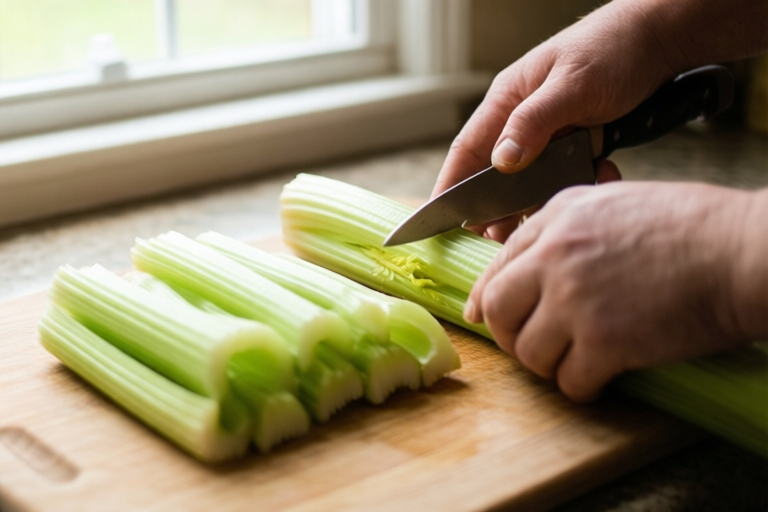
How to Dice Celery Evenly for Stocks and Stuffing looks like a small kitchen task, but it changes how the final food tastes, cooks, and feels. When the pieces, heat, timing, or setup are inconsistent, the recipe becomes harder to control. This guide turns dice celery evenly into a repeatable knife skill instead of a guess. For a related technique, see How to Dice an Onion: Clean Cuts, Safe Grip, Consistent Size.
The goal is not speed first. The goal is clean control: stable setup, correct tool choice, clear sequence, and a result you can recognize before the food is ruined. Once the structure is reliable, speed comes naturally. The FDA's food safety in your kitchen resource reinforces the basic clean-workflow habits behind safe prep.
What this technique actually does
Dice Celery Evenly for Stocks and Stuffing helps the ingredient behave predictably. Even pieces cook at a similar pace, measured heat gives flavor time to develop, and a clean workflow prevents the small mistakes that create stocks and stuffing. USDA's guidance on cutting boards is a useful outside reference for keeping boards clean and avoiding cross-contamination.
For home cooks, the practical win is consistency. You can repeat the same action on a busy weeknight and trust the result because the board, tool, ingredient, and timing are under control.
When to use this technique
- Aromatic bases where uneven pieces burn or stay raw
- Soups, sauces, stir-fries, and sautés that need even cooking
- Meal prep where consistent size saves time later
- Beginner knife practice that builds safe hand habits
- Any recipe where texture matters as much as flavor
Tools
- Sharp knife
- Stable cutting board
- Damp towel
- Scrap bowl
- And clean towel
- Small bowl or container for finished prep
- Clear counter space with no unrelated clutter
Prep checklist before first step
- Read the full method once before starting
- Clear the work area so the main action is not crowded
- Dry your hands, tools, and work surface where needed
- Decide the target result before moving quickly
- Keep scraps, finished food, and active work in separate places
Step-by-step: how to Dice Celery Evenly for Stocks and Stuffing
Step 1: Rinse, dry, and trim the celery
Wash between the ribs, dry the stalks, and trim away the root end and any tired leaves. Dry celery is easier to hold and gives cleaner cuts.
Step 2: Create a flat stable base
Place the curved side of the celery down and cut each stalk into manageable lengths. If a piece rocks, turn it until it sits as flat as possible on the board.
Step 3: Slice the stalks into long planks
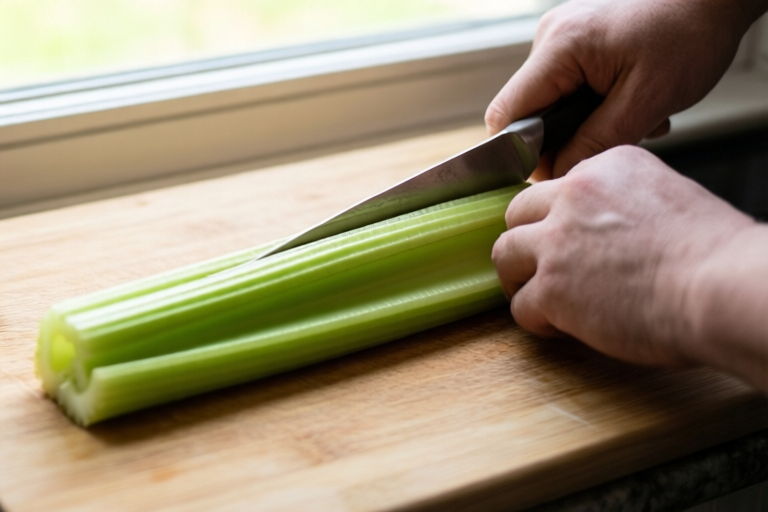
Cut each celery lengthwise into narrow planks that follow the rib. Keep the knife path straight so the pieces stay even from end to end. For a related technique, see Knife Skills & Prep.
Step 4: Cut the planks into sticks
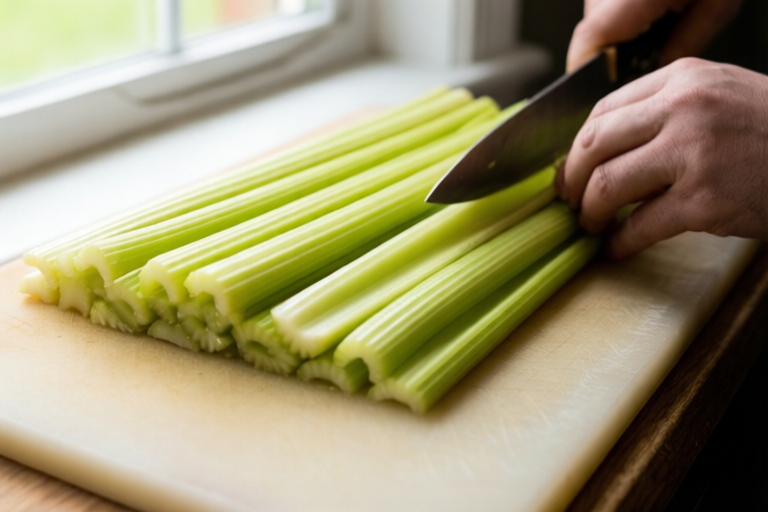
Stack a small number of planks and slice them lengthwise into thin sticks. The sticks should look like pale green batons, not scallions or shredded strings. For a related technique, see Cooking Techniques.
Step 5: Make the final celery dice
Turn the celery sticks sideways and cut them into small, even dice. Keep the pieces close together on the board so you can check the size before adding them to stock, stuffing, or an aromatic base.
Step 6: Check the dice before adding them
Spread the diced celery on the board and remove any oversized pieces. Even dice soften at the same pace in stocks, stuffing, and aromatic bases.
Cues that you are doing it right
- The result looks consistent at a quick glance
- The tool feels controlled instead of forced
- The ingredient keeps its intended texture
- There is no harsh, burnt, watery, or muddy smell
- Cleanup and transfer feel simple because the station stayed organized
Mistakes and fixes
- Rushing the setup: pause and rebuild the station before continuing.
- Using too much force: lighten pressure and let the tool do the work.
- Uneven results: slow down and choose one spacing, heat level, or timing target.
- Cluttered surface: remove scraps and extra tools before the next pass.
- Losing texture: stop earlier and avoid repeated handling after the target is reached.
- Harsh flavor: lower the heat, shorten contact time, or use a cleaner cut.
Variations and how they behave
- Fine result: cooks or extracts quickly, but gives you less margin for error.
- Medium result: best default for most home cooking because it is forgiving.
- Larger result: keeps more structure and works better for longer cooking.
- Gentler handling: protects delicate texture and reduces harsh flavor.
Practice drill for consistency
Repeat the same task three times in a row. On the first pass, focus only on safety and setup. On the second, focus on evenness. On the third, keep the same quality while reducing hesitation. Compare the results before cooking, brewing, or serving.
The point of the drill is not perfection. It is calibration. Once you can see the difference between uneven and controlled work, the next recipe becomes easier.
Troubleshooting in real cooking scenarios
If the result tastes harsh, burns quickly, turns watery, or feels inconsistent, the problem usually started before the final step. Check the size, heat, moisture, timing, and tool pressure. Fix one variable at a time instead of changing everything at once.
If the process feels stressful, simplify the station. Use fewer props, work with a smaller amount, and slow the highest-risk motion. A controlled small batch teaches more than a rushed large batch.
Frequently Asked Questions
What should beginners focus on first?
Start with stability and evenness. Speed only matters after the result is consistent.
How do I know if I am using too much force?
If the ingredient crushes, tears, splashes, or sticks more than expected, reduce pressure and use a smoother motion.
Can I prep this ahead of time?
Sometimes, but fresh prep usually gives the best texture and aroma. If storing, use a sealed container and keep different cut sizes or stages separate.
Why does the result change in the pan or cup?
Heat, water, oil, and time exaggerate small differences. Even prep makes those changes easier to predict.
What is the most common mistake?
Most mistakes come from starting before the station is stable or continuing after the target result has already been reached.
